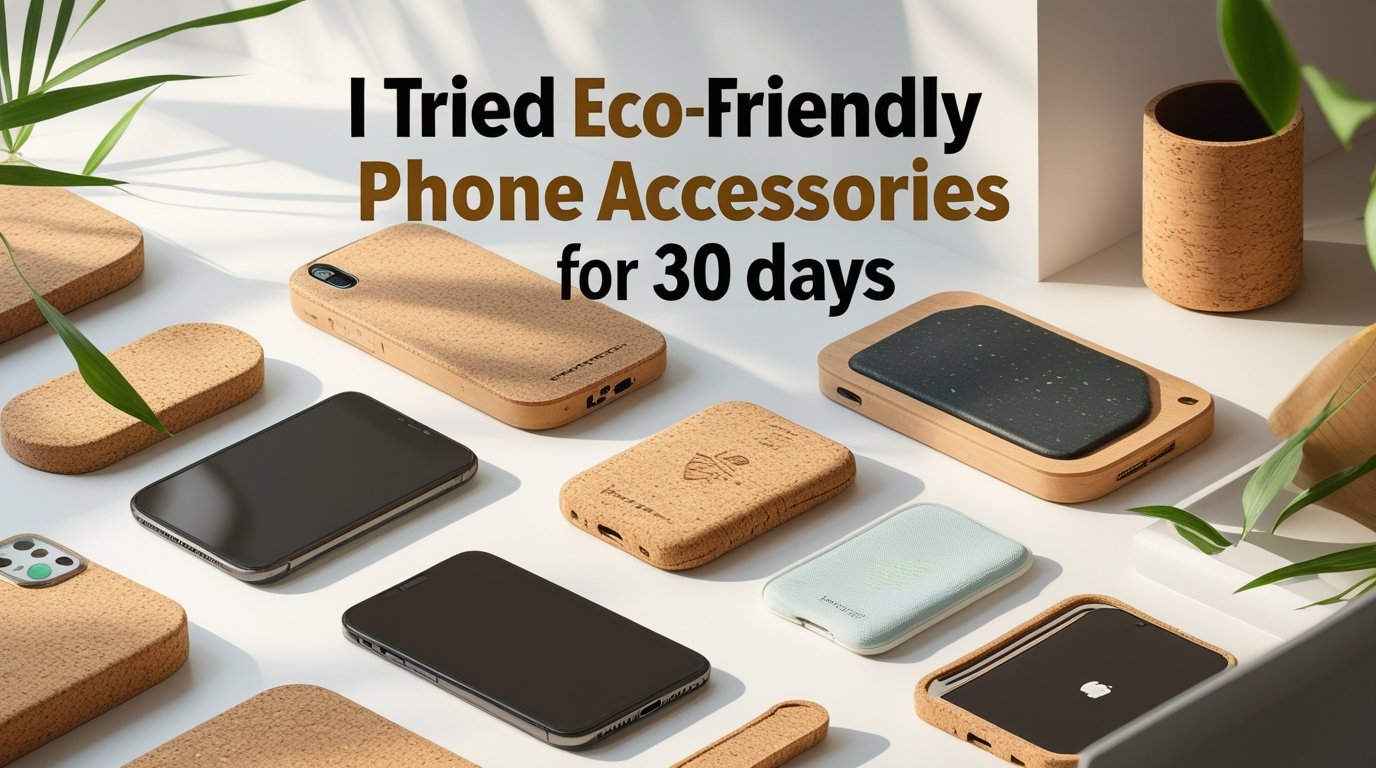
I’ll admit it: I am a tech addict. My phone is practically an extension of my hand. The flip side of this tech love affair is the pile of dead, yellowed plastic phone cases and frayed charging cables I’ve accumulated over the years. Every time I looked at that little mountain of electronic waste in my drawer, a wave of guilt would hit me. I talk a good game about sustainability, but my tech habit was secretly contributing to the plastic crisis.
It was time to put my money where my mouth is. I decided to challenge myself: 30 days using only eco-friendly phone accessories. No virgin plastic, no toxic materials, just sustainable tech. This wasn’t just about protecting my phone; it was about seeing if a truly green tech life was practical, stylish, and durable. Spoiler alert: the journey was way more eye-opening than I ever expected, and it changed the way I buy everything. If you’re like me, stuck between your love for the latest gadgets and a nagging environmental conscience, then stick around. This is my story of going green, one phone case and cable at a time.
Why I Made the Switch:
Before diving into the trial, I had to understand the scale of the problem I was trying to solve. The tech accessory industry is a silent but massive contributor to plastic pollution. Think about it: how many cheap, brightly colored phone cases have you bought and tossed? The global estimate is over a billion phone cases sold annually, and most are made from materials like polycarbonate and TPU, which are petroleum-based and can take hundreds of years to break down. They just sit in a landfill, eventually crumbling into microplastics that poison our environment.
I had cases made from hard plastic, soft silicone, and weird hybrid blends. None of them were truly recyclable because they were made from mixed, cheap materials. My charging cables were just as bad, wrapped in PVC that cracks and frays, exposing wires and adding more impossible-to-recycle plastic and e-waste to the system. This realization hit me hard: my small accessory choices were feeding a colossal industrial waste monster. My 30-day challenge became less of a novelty and more of a personal necessity. I needed a way to protect my device without destroying the planet.
Step 1: Curating the Eco-Kit (The Shopping Spree):
The first step was to replace the three major accessories I use daily: my phone case, my phone grip, and my charging cable. My goal was to find options that were either compostable, made from recycled materials, or crafted from highly sustainable phone case materials like bamboo or cork. I dove into the market, and here’s what I chose, based on the principle that they must genuinely perform their job and not just look “green.”
1. The Compostable Phone Case:
This was the easiest place to start, as brands like Pela and Casetify have made huge strides in this area. I ended up choosing a case made from a bioplastic blend of flax straw and plant-based polymers. It was promised to be 100% compostable, leaving no toxic residue.
- First Impression: The texture was the most surprising thing. It felt matte, almost earthy, definitely not the slick, hard feel of traditional plastic. It had a tiny, almost imperceptible flecked look, which I found quite stylish. It wasn’t bulky, but it definitely had enough grip and a raised lip around the screen, which gave me confidence in its protective ability.
- The Durability Test: The primary keyword is sustainable phone cases, and I needed it to hold up. I intentionally dropped my phone a couple of times from pocket height onto my wooden floor. No cracks, no damage. The flexibility of the bioplastic actually seemed to absorb the shock better than some of the rigid plastic cases I’d used before.
2. The Plant-Based Phone Grip:
I cannot function without a phone grip. My old one was a chunk of hard plastic that would probably outlive my grandchildren. I swapped it out for a biodegradable phone grip made from a similar plant-based polymer as my case.
- First Impression: It was lightweight, and the adhesive seemed strong. The mechanism was smooth, but it felt a little less “snappy” than the traditional plastic versions, which gave me a moment of doubt.
- The Practicality Test: The grip was a great companion to the matte-textured case. My hand fatigue actually seemed to lessen because the whole setup was just naturally grippier. I used it hundreds of times during the 30 days, opening and collapsing it, and it never failed or loosened. It proved that a biodegradable phone grip doesn’t mean a flimsy product.
3. The Recycled Charging Cable:
Finding a truly eco-friendly charging cable was the trickiest part. Cables are notorious for being a nightmare of mixed materials. I settled on a braided cable from a company that explicitly stated it was made from GRS-certified (Global Recycle Standard) recycled nylon and recycled aluminum connector housings. They also promised a lifetime warranty, which speaks to a commitment to longevity over cheap replacement cycles.
- First Impression: It was thick, braided, and felt incredibly premium. The recycled aluminum housing on the connector looked sleek and felt far sturdier than the cheap plastic sleeves I was used to.
- The Performance Test: It charged my phone just as fast as my original cable, and the braided nylon meant no irritating coiling or tangles. The most important thing was the peace of mind: if this cable ever failed, the company offered a replacement, keeping it out of the waste stream for longer.
Week 1: Overcoming the Skepticism:
The first seven days were all about shaking off preconceptions. My initial bias was that eco-friendly phone accessories meant less durable, less stylish, or less functional.
I found the opposite to be true.
The case felt great in my hand, warm, not cold, and slick like glass-like plastic. The color was a rich, deep forest green, which looked far more sophisticated than the bright, disposable-looking colors of my old cases. I had multiple friends comment on the texture, mistaking it for a new type of fancy composite material. The aesthetic was a huge win; I wasn’t sacrificing style at all.
The initial concern I had about the compostable material degrading prematurely proved unfounded. I live in a humid environment, and I’m a heavy phone user, it’s constantly in my pocket, exposed to moisture and heat. The material remained perfectly solid, rigid where it needed to be, and flexible around the buttons. I started to understand that these compostable charging cables and cases are engineered to last the lifespan of a phone, only beginning to break down under specific, high-heat industrial composting conditions. This was a critical distinction, and it was the first major lesson of the challenge.
Week 2: The Longevity and Protection Deep Dive:
By the second week, the accessories were no longer a novelty; they were just my gear. This is where the real test of durability for long-term use happens.
Case Protection:
I am naturally clumsy. Over the years, I’ve shattered enough screens to know that a good case is non-negotiable. The flax straw case offered fantastic impact protection. I had a few more accidental drops—once onto concrete, getting out of the car, and once off the side of my kitchen counter. Both times, the matte, biopolymer material absorbed the shock without a scratch on the phone or the case itself.
It dawned on me that the durability aspect is actually a huge part of the sustainable phone case narrative. A case that prevents me from having to replace my entire phone is the ultimate act of environmental responsibility, as the production of the phone itself is where the biggest carbon footprint lies. The eco-friendly choice was actually the best protective choice I’d made in years. It’s a powerful synergy: durability equals sustainability.
Cable Performance:
The braided nylon cable was a tank. I usually kill cheap cables by bending them aggressively at the connector, where the plastic always rips. The robust, recycled aluminum housing on this cable felt unbreakable. I used the cable in my car, at my desk, and threw it in my backpack every day. It never tangled, and the connection never frayed. I realized the short-term cost might be higher, but the guaranteed longevity of these eco-friendly phone accessories was a major money-saver in the long run, eliminating the need to buy two or three cheap replacements every year.
Week 3: Thinking Beyond the Product (E-Waste and Circularity):
This week forced me to look at the “end of life” plan for my accessories. When you buy a cheap plastic case, the end-of-life plan is simply “trash.” With sustainable products, the brand’s commitment to circularity became a major factor in my personal experience.
I looked up the specific brands I was using. Many of the leading manufacturers of sustainable phone cases offer take-back programs. When the case has served its purpose, you don’t throw it out; you mail it back to the company. They then either industrially compost it or use it as material to create new products, closing the loop entirely.
This was revolutionary for my personal e-waste anxiety. For the first time, I felt like I was purchasing a product with a built-in responsible disposal plan. The commitment to a circular economy, the idea that waste is eliminated and resources are kept in use, is the real key to the future of technology, and these small accessory companies are leading the charge. This simple act of buying a case with an actual end-of-life solution felt like the most impactful change I made all month.
Week 4: The Final Verdict on Practicality and Feel:
As the 30 days concluded, I reflected on the major keywords I wanted to cover:
1. Eco-Friendly Phone Accessories: A Total Win on Aesthetics:
I never felt like I was compromising on style. The cases and grips offered rich, earthy, or speckled textures that stood out in a sea of generic, injection-molded plastic. They felt premium, not granola. If anything, my new gear felt more unique and spoke to a conscious, thoughtful consumerism I wanted to embody. The designs were thoughtful, and the color palette was sophisticated.
2. Sustainable Phone Cases:
The key takeaway here is that sustainable materials, like flax-based biopolymers, bamboo, and recycled plastics, are more than capable of providing robust protection. They offer an excellent balance of shock absorption and rigidity. The term sustainable phone cases should be synonymous with durable cases. They are designed to last, which is the most sustainable feature of all.
3. Biodegradable Phone Grip:
My initial concern about the plant-based grip being flimsy was entirely dismissed. It performed its core function flawlessly for 30 days of heavy use. It was comfortable, secured my phone, and never lost its tension. Knowing that if I ever swapped my case, the grip could be composted instead of living forever in a landfill was incredibly satisfying.
4. Compostable Charging Cables:
The upfront cost of a compostable charging cable or a recycled nylon cable is higher, but the sheer quality of the build, the thick braiding, and the metal connectors justify it as an investment. This is the opposite of fast-fashion tech; it’s quality-first tech that is built to serve you for years, making the long-term cost much lower.
The 30-day experiment proved definitively that switching to eco-friendly phone accessories is not a sacrifice. It’s an upgrade. It’s an upgrade in material feel, an upgrade in durability, and an exponential upgrade in peace of mind knowing that my tech habit is no longer fueling a global plastic crisis. This is no longer a niche market; it is simply the better way to buy tech gear.
Conclusion:
The little pile of yellowed plastic in my drawer served as my motivation, but my 30-day eco-accessory challenge served as my education. I came into this expecting to deal with slightly clunky, less protective gear in the name of a principle. I left with a setup that looks, feels, and performs better than any of the traditional plastic accessories I’ve ever owned. The future of tech accessories is unquestionably green, and it’s a future that feels good in your hand and good for the planet. This small change has led me to scrutinize the sustainability of every other purchase I make. If we can make a phone case compostable, what other small parts of our lives can we decarbonize and de-plasticize? I urge you to try the switch; you will not regret it.
FAQs:
1. Are eco-friendly phone cases truly as protective as plastic ones?
Yes, cases made from biopolymers, flax straw, or recycled materials offer excellent shock absorption and are often drop-tested for high durability.
2. How long does a compostable phone case take to break down?
In an industrial composting facility, most certified compostable cases break down within 3 to 6 months, leaving no toxic residue.
3. What materials should I look for in a sustainable phone case?
Look for Flaxstic, plant-based bioplastics (like PLA or PHBH), FSC-certified bamboo or wood, or GRS-certified recycled plastic.
4. Is there a sustainable alternative to screen protectors?
Yes, many companies now offer screen protectors made from recycled or post-consumer recycled glass instead of virgin materials.
5. Are eco-friendly charging cables more durable than standard ones?
Often, yes, because they tend to use thick, braided recycled nylon or aluminum housings, which are designed for longevity and to reduce frequent replacement.
6. Does the term “biodegradable” mean the same as “compostable”?
No, “compostable” is a stricter term, meaning the item breaks down completely into non-toxic, natural elements, while “biodegradable” can still leave behind residue or require hundreds of years.