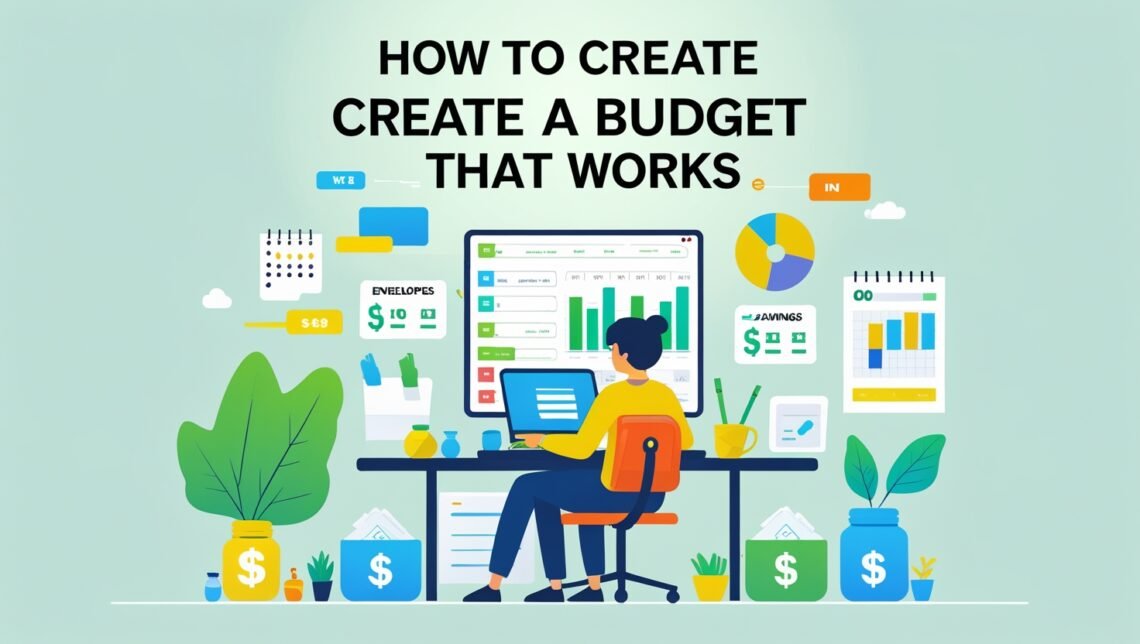
Nowadays, when everything is becoming expensive and income is not increasing, it is very important for every person to understand why it is important to make a budget. But the real issue is that most people learn to make a budget, but do not implement it. The first reason is that they make an unrealistic budget, or they restrict themselves so much that they are not able to enjoy their life. Then, when their plan fails in a week or two, they stop making the budget. The purpose of this introduction is to make you understand that a budget is not just a plan written on paper, but a plan. It is a way to manage your daily life.
If your budget is realistic and you make it a part of your routine, you gain control over your money. You know where every rupee is going and how much is being spent on what. People who make a budget reduce debt, create an emergency fund, and easily achieve big goals like vacation, buying a car, or building a house. In this introduction, I want to tell you that making a budget is not a boring job, but it is a powerful tool that gives you financial freedom, and if you make it in the right way, it is workable for everyone.
Understand Your Income and Expenses
Whenever you start making a budget, the first step is to understand your total income and expenses. Many people make this mistake; they make a budget just by looking at their salary or monthly income, but in reality, along with income, you should also know your fixed and variable expenses. Fixed expenses include rent bills, school fees, and loan installments. These are the things that are fixed every month. Variable expenses include grocery shopping, entertainment, fuel, and other daily expenses.
Many times, people ignore small things like snacks or online shopping, but in reality, these are the small things. Things eventually finish the budget, so first of all, write down your entire income and expenses on paper or an Excel sheet, or any app. The clearer you are, the better it will be. If you do not remember any expenses, then keep all your receipts safely for a month. This way you will get to know which thing your money is going to more. When you get a clear picture, then you can see where you can cut down and what is necessary, and what can be avoided. This step is very important so that the budget is realistic and workable as well.
Set Realistic Financial Goals:
A budget that works in reality is never made without a goal. If you do not have any financial goals, you will get confused by just writing numbers. So first of all, decide what your short-term and long-term goals are. Short-term goals can include whether you want to create an emergency fund or pay off a part of the loan in a month, or save money for a vacation. Long-term goals include building a house, children’s education, or retirement planning. When your goals are clear, you can set each category in the budget according to priority.
For example, if you have a six-month plan, then you can decide on a budget. If you want to create an emergency fund of Rs 1 lakh in a month, then you can keep a portion of every month on one side. Many people make the mistake they setting unrealistic goals like saving 50% of their income in a month, which is practically impossible. When the goals are unrealistic, the motivation gets lost. So, make realistic goals that match your income and routine and divide those goals into small steps so that you can track and achieve them. When the goals are realistic, the budget becomes workable..
Choose a Budgeting Method
Now that you know your income, expenses, and goals, the next stage is to decide which budgeting method to use. First of all, it is important to understand that there is no concept of one size fits all in budgeting. Every person chooses the best method according to their needs and routine. The most popular method is zero-based budgeting. In this, you put all the money in some category, and at the end of the month, the balance remains zero. This tells us what is being used for every rupee. Another popular method is the 50 30 20 rule. In this, you spend 50 percent of your income on needs, 30 percent on wants, and 20 percent on savings and debt payment.
If you prefer to use cash, then the envelope system is also good, as there is a separate envelope for each category, and when the money runs out, no more is withdrawn. In the digital era, many apps make budgeting easy, such as YNAB, Mint, or any local expense tracker app. You have to see which method works for you. Choose one method and test it for 2-3 months, and then change it if necessary so that the budget does not fail.
Track and Categorize Your Spending:
When you make a budget, it is possible to implement it only when you track your expenses. Many people just make a plan and think that the work is done, but in reality, the most important step is you check daily what the money is being spent on. If you do not track daily expenses, you will not know where the overspending is happening and why the budget is failing. So do a small thing and divide your expenses into categories like groceries, fuel, entertainment, eating out, shopping, or bills. When you make categories, you should understand. You know where to cut down and what needs to be reduced. For this, you can use a notebook or an Excel sheet, or a free expense tracker app. Write everything down every night in 5 minutes.
This will give you a complete picture after a month as to how much money was spent. If you have set a limit for any category, then keep in mind that limit. If you see the limit being crossed, then adjust it in the next month. Tracking also controls impulse buying and stops unnecessary shopping. When you understand the categories, the budget becomes workable, and money is not wasted. This increases savings. And you are financially strong.
Adjust and Optimize Your Budget:
Budget making is not a static task; it is a dynamic process. This means that you have to check every month or every week whether your plan is working or not. Many people make a budget once and think that now everything will go well, but in reality, sometimes in life, such expenses come up that are unexpected, like a doctor’s bill, car repair, or a gift for a function. If you do not maintain flexibility in your budget, then such expenses will put you under stress. So, at the end of every month, sit down and review your budget and see in which category overspending is happening. Money is saved, and is it necessary to create a new category? It is possible that you may have to reduce the amount of one category and put it in another.
For example, if you are short on fuel this month, then invest that money in savings or some loan payment Optimizing the budget also means that you should look for cheaper alternatives like buying in bulk at grocery stores or taking advantage of sales When you regularly adjust the budget, it goes with reality and you don’t get new surprises every month, so never skip this step It becomes workable only after reviewing the budget every month.
Tools and Apps to Make Budgeting Easier:
Nowadays, it is a digital era, and making a budget has become much easier than before. Earlier, people used to write everything in notebooks or diaries, but now with the help of smartphones and laptops, everyone can easily track their daily expenses. There are many free and paid apps available that make budgeting easy and fun. The first advantage is that you do not have to do manual calculations again and again, and everything is available with one click. Popular budgeting apps like YNAB, Mint, or Pocket Guard help you manage income, expenses, and categories. In these apps, you can also set goals and get alerts if you limit. You are crossing the lines, and graphs are also made, which let you know which thing is spending more money is being spent. If you face difficulty with English apps, you can try local apps that are in Urdu and provide a simple interface. If you don’t want to use apps, you can also make a free template of Google Sheets or Excel, which gets auto calculated. Because of these tools, you find everything organized, and making a budget does not feel boring. When tracking is easy, then the person remains disciplined and overspending reduces. Therefore, the use of tools and apps is very important.
Conclusion:
When you have understood every step of how to write income and expenses, how to make goals, how to choose the method, and how to track daily expenses, now the most important thing is that you stay consistent with this plan. Often, people follow it for a couple of months, then leave it, and then complain that the budget does not work. In reality, making a budget is not done once; rather, it has to be made a part of the routine. When you write the account of your money daily or weekly, you know that you are financially safe and no big expense or emergency will disturb you when you set realistic goals.
If you follow the budget with discipline, you can avoid debt and also make savings. This secures your future and reduces stress. The most important thing is that while making the budget, do not restrict yourself at all. Also, allow some fun spending so that you can enjoy your life and keep money under control. If you have a little patience and keep a regular check, you can make a workable budget, which will make your life better and make you financially strong.
